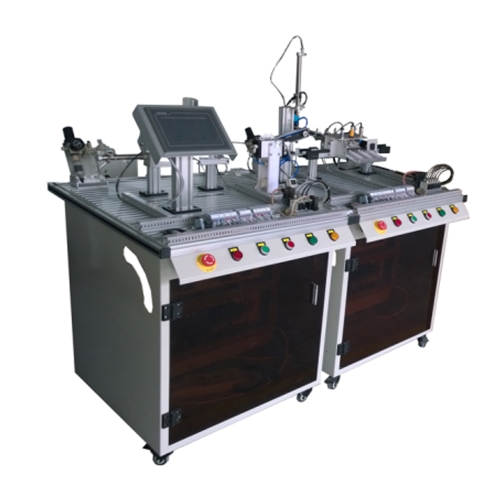
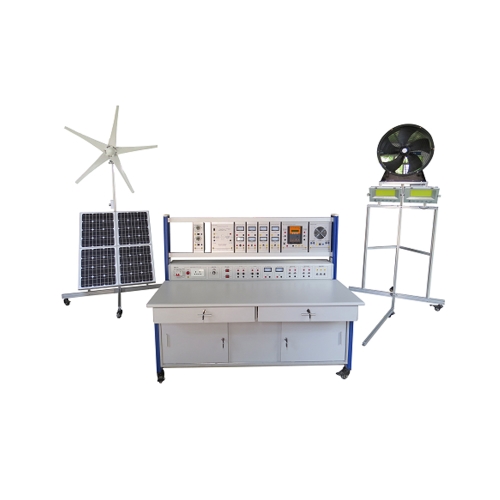
AFE5007 Linear Circuit Lab Teaching Equipment Didactic Equipment Teaching Electronics Lab Equipment
1. Product Introduction
1.1 Product Description
This device can be used to perform experiments covering basic electricity, magnetism, basic electronic circuits, the characteristics and applications of other electronic components, and the characteristics and applications of oscillators. These experiments include DC RC circuits and transient phenomena, transformer characteristics, parallel resonant circuits, an introduction to magnetic components, magnetic fields, Ampere's law, diode characteristics, rectifier circuits, Zener diode characteristics, LED characteristics, transistor polarity identification and characteristics, FET characteristics, SCR characteristics, UJT characteristics, simple amplifiers, simple complementary amplifiers, simple voltage regulators, push-pull amplifier circuits, controllable brightness bulbs, multi-stage cascade amplifiers, relay characteristics, touch switches, light control circuits, thermal control circuits, sound control circuits, intermittent oscillator characteristics, electronic buzzers, multivibrators, and LC resonant circuits.
1.2 Product Features
Modular Design: With eleven different templates, this device provides flexible experimental configurations, facilitating diverse experimental projects.
Convenience: The fault repair switch allows students to quickly set up and repair faults, improving training efficiency. Standardized Interface: Uses a universal eight-position DIP switch for fault settings, simplifying the operation process and making it easier for students to understand and master.
Practicality: This device emphasizes hands-on development, allowing students to learn in an environment that simulates real-world faults, enhancing the practical and interactive nature of learning.
Easy Reset: After troubleshooting, simply return the DIP switch to its normal position to reset the template, facilitating continuous experimentation.
Safety: All fault switches are factory-set to normal circuit operation, ensuring safety from the first use.
Adaptability: Suitable for students of all levels, from basic electrical engineering to complex circuit analysis, this device supports a wide range of teaching needs.
2. Technical Specifications
2.1 Basic Technical Parameters
Working power supply Single-phase, three-wire, 220V ±10%, 60Hz
Working environment Ambient temperature: -10°C to +40°C
Relative humidity: <85% (25°C)
2.2 Equipment appearance parameters
Dimension Storage Box 843mm*206mm*266mm
Linear Circuit Experiment Teaching Module
400mm*300mm*131mm
Weight <30kg
3. Product Description
3.1 Product Main Part
No. Name Quantity
1 Storage Box 1
2 Linear Circuit Experiment Teaching Module 1
3 Template Unit 12
3.2 Product Module
No. Name Quantity
1 001 Basic Electricity Experiments Module 1
2 002 Magnetism Element Introduction Module 1
3 003 Magnetic Field Module 1
4 004 Ampere's Law Module 1
5 005 Fleming's Law Module 1
6 006 Electromagnetic Induction Module 1
7 007 Electronic Circuit Fundamental Experiment Module 1
8 008 Basic Electronic Circuit Experiments Module (1) 1
9 009 Electronic Circuit Experiments Module (2) 1
10 010 Special Electronic Components Experiments Module 1
11 011 Oscillator Experiments and Applications Module 1
12 012 Bread board Module 1
3.3 Product Power Module
No. Name Quantity
1 DC 0-20V voltage measurement module 1
2 DC 0-100mA current measurement module 1
3 AC/DC voltmeter module 1
4 AC/DC ammeter module 1
5 AC voltmeter module 1
6 AC ammeter module 1
7 Toggle switch 1
8 Speaker module 1
9 AC 9V voltage source module 1
10 Fixed DC power supply module 1
11 DC voltage regulator module 1
12 Slider resistor module 4
13 Function generator module 5
3.4 Product accessories
No. Name Quantity
1 2mm electrical safety connection cable 6
2 2mm electrical safety connection cable 6
3 2mm electrical safety connection cable 10
4 Three-core British power cord 1
5 Cylindrical magnet 1
6 Fuse 5
4. Product Teaching Experiment List
Experiment 1: DC RC Circuit and Transient Phenomenon Experiment
Experiment 2: Transformer Characteristics Experiment
Experiment 3: Parallel Resonance Circuit Experiment
Experiment 4: Introduction to Magnetic Components
Experiment 5: Magnetic Field Experiment
Experiment 6: Ampere's Law Experiment
Experiment 7: Diode Characteristics Experiment
Experiment 8: Rectifier Circuit Experiment
Experiment 9: Zener Diode Characteristics Experiment
Experiment 10: LED Characteristics Experiment
Experiment 11: Transistor Polarity Identification and Characteristics Experiment
Experiment 12: FET Characteristics Experiment
Experiment 13: SCR Characteristics Experiment
Experiment 14: UJT Characteristics Experiment
Experiment 15: Simple Amplifier Experiment
Experiment 16: Simple Complementary Amplifier Experiment
Experiment 17: Simple UK Voltage Regulator
Experiment 18: Push-Pull Amplifier Circuit Experiment
Experiment 19: Controllable Brightness Light Bulb Experiment
Experiment 20: Multi-Stage Cascade Amplifier Experiment
Experiment 21: Relay Characteristics Experiment
Experiment 22: Touch Switch Experiment
Experiment 23: Light Control Circuit Experiment
Experiment 24: Thermal Control Circuit Experiment
Experiment 25: Sound Control Circuit Experiment
Experiment 26: Intermittent Oscillator Characteristics Experiment
Experiment 27 Electronic Buzzer Experiment
Experiment 28: LC Resonance Circuit Experiment



 Login
Login  Inquiry List